
Reacher Jerry
How to Get TikTok Shop Samples: Creator and Seller Guide
Learn how eligible TikTok Shop creators request samples, what content obligations apply, and how sellers review, ship, and track sample requests.
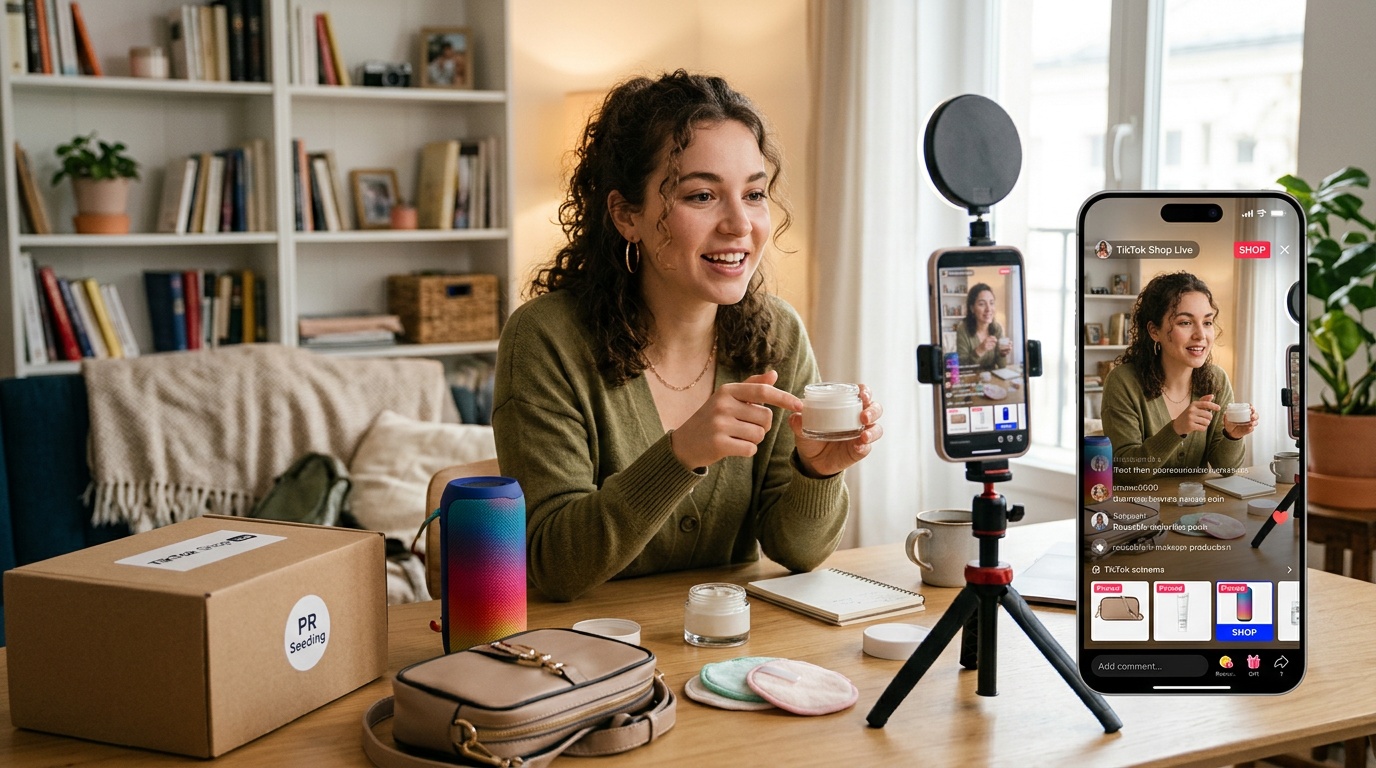
TikTok Shop sample requests and fulfillment
TikTok Shop samples are products that eligible creators can request or purchase for shoppable content. A free sample is not an unconditional gift: the seller controls availability and approval, and an approved creator normally accepts a content obligation. Refundable samples require an upfront purchase and return the purchase price only when the stated criteria are met.
Eligibility, limits, menus, deadlines, and sample types differ by market, account, creator history, collaboration, and product. This guide uses current official US TikTok Shop documentation and labels those rules accordingly. Always verify the offer shown in your own Creator Center or Seller Center.
Key takeaways
- TikTok Shop creator eligibility and public free-sample eligibility are separate checks.
- The current US sample guide does not support a zero-follower route for public sample requests.
- Creators can find offers in Product Marketplace or Collab Invites when their account is eligible.
- Sellers decide whether to approve requests and can apply product-level creator thresholds.
- Both sides should track shipping, content deadlines, disclosures, and performance.
Understand TikTok Shop sample types
A free sample is paid for and shipped by the seller or provided through an eligible TikTok Shop program. A refundable sample is purchased by the creator; the purchase price is refunded only after the creator meets the criteria in the offer. Those criteria can involve eligible content or attributed orders. Read the current terms before paying.
| Type | Upfront creator cost | Approval or refund condition | Main risk |
|---|---|---|---|
| Free sample | No product purchase | Seller or campaign approval plus content obligation | Request can be declined; missed content can affect access |
| Refundable sample | Creator buys the product | Refund follows the terms shown when ordered | Purchase remains paid if criteria are not met |
| Target collaboration sample | Depends on invitation | Terms are set in the collaboration | Invitation does not remove content and disclosure duties |
Samples help a creator test the actual item before making content. They do not guarantee views, sales, commission, future products, or a positive review. A creator should reject an item that is irrelevant, unsafe, incorrectly described, or tied to claims they cannot support.
Check creator eligibility and offer access
The official US How Creators Can Request Samples guide, dated April 10, 2026, currently says a TikTok Shop creator with more than 5,000 followers can apply for or purchase samples when a seller offers them. The same guide says public free-sample access is limited to creators who generated sales within the previous 120 days. It separately notes that this sales rule does not apply to targeted sample campaigns or Target collaborations.
Those are US feature rules at the cited date, not universal thresholds. TikTok Shop creator access itself has additional age, identity, account-health and market requirements. Seller thresholds and inventory can hide the request option even when a creator meets platform eligibility.
Why there is no zero-follower promise
The current official US evidence does not support promising public free-sample access to a zero-follower account. New creators can build relevant content with products they own, participate in eligible invitation programs, or use a refundable sample when available and financially suitable. None of those routes guarantees approval or reimbursement.
How creators request and fulfill samples
- Open Creator Center: enter Product Marketplace or review Collab Invites.
- Find an available offer: use the Free Sample filter or open a product displaying Get Sample.
- Read the terms: check sample type, product, commission, shipping, refund condition, deadline, and content requirement.
- Check fit: confirm the item suits your audience, market, content expertise, and safety standards.
- Request from the seller: provide the required size, contact, and shipping details. The seller can approve, reject, or leave the request unanswered.
- Track the order: use Manage Samples for status, shipment, content due dates, and eligible performance information.
- Fulfill the exact obligation: test the product, disclose the relationship, link the correct item, and publish the required format before the displayed deadline.
The cited US guide currently describes posting within 14 days after receipt. It lists a public short-form video that remains available for at least three days or an approximately ten-minute LIVE with the product pinned. The terms visible on the actual order control; do not copy US timing into another market without checking.
Review before accepting
Inspect listing accuracy, seller history, customer feedback, shipping market, product condition, required claims, commission, usage rights, and whether the product can be demonstrated honestly. Do not request more samples than you can review and feature on time. Keep records if the shipment is late, damaged, incorrect, or unavailable.
How sellers set up and manage samples
The official US seller sample guide, dated November 21, 2025, describes free and refundable samples in Open and Target Collaborations. Sellers can set quantity, request period and creator thresholds, then approve or reject requests, arrange shipping, monitor content, and review performance.
- Choose the collaboration: decide whether creators discover the product openly or receive targeted invitations.
- Set the offer: define sample type, quantity, dates, criteria, commission, and content expectations.
- Review creator fit: examine category history, content quality, audience context, sales evidence, and fulfillment behavior.
- Approve with inventory: reserve only the quantity the seller can ship and support.
- Ship and track: use Seller Center shipping and tracking after approval.
- Monitor fulfillment: follow the content obligation, product link, disclosure, quality, and results.
The cited US guide currently gives sellers seven days to review a free-sample request and seven days after approval to ship. Those deadlines can change and should be checked in the live account.
Do not confuse the two roles
Creators request, receive, test and feature samples. Sellers configure offers, allocate inventory, approve or reject creators, ship products and monitor fulfillment. Reacher is designed for the seller-side creator relationship and sample pipeline; it does not change TikTok's creator eligibility or native Shop obligations.
Improve creator-product fit before shipping
Use the product's customer, category, price, shipping area, demonstration needs and claim risk to define the creator profile. Review multiple recent posts and commercial examples rather than relying on follower count alone. Previous GMV and fulfillment can help prioritize a shortlist but do not predict the outcome of a different product.
Reacher helps TikTok Shop teams organize creator discovery, outreach, CRM, samples, and affiliate performance context. Keep native TikTok Shop status as the source of truth for eligibility, order, shipment, and fulfillment while using Reacher to maintain the broader creator relationship.
Frequently asked questions
Can anyone get free samples on TikTok Shop?
No. Access depends on market, account eligibility, creator history, seller settings, inventory, and collaboration type. Check the current offer in Creator Center.
Can a creator with zero followers request a public free sample?
The current US sample guide does not support that promise. It states more than 5,000 followers for sample application or purchase and applies a recent-sales rule to public free samples.
Does a seller have to approve an eligible creator?
No. Sellers can set thresholds and approve, reject, or not act on a request. Product and sample inventory also matter.
What happens after a sample arrives?
The creator should test it and meet the exact shoppable-content obligation and deadline shown in Manage Samples, including the correct product link and disclosure.
What is the difference between a free and refundable sample?
A free sample has no product purchase upfront. A refundable sample is purchased first and refunded only if the creator meets the displayed criteria.